Python is everywhere today. It runs data science notebooks, AI research, web servers, school lessons and the little scripts that save people hours of boring work. But it did not start in a big company with a big plan. It started as one programmer's holiday project in Amsterdam, more than 35 years ago.
This is the story of how that hobby became one of the most popular programming languages in the world.
Who created Python?
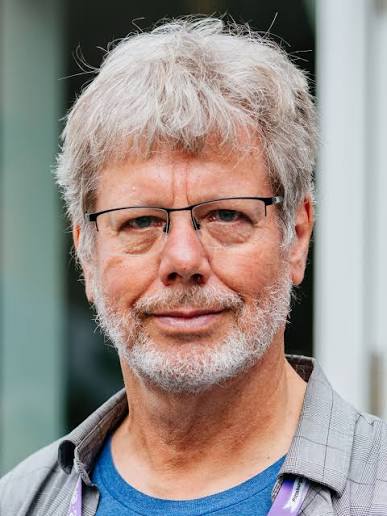
Python was created by Guido van Rossum, a Dutch programmer. In the late 1980s he worked at CWI (Centrum Wiskunde & Informatica), a research institute in Amsterdam. There he had helped build a teaching language called ABC, which was designed to be easy for beginners to read and write.
ABC had good ideas, but it never caught on: it was hard to extend and did not work well with the rest of the computer. Guido also needed a practical scripting language for Amoeba, an operating system his group was working on. So he started thinking about a language that kept ABC's readability but was open, extensible and useful for real work.
December 1989: a Christmas project
In December 1989, Guido was looking for something to keep himself busy during the week around Christmas, when the office was closed. He decided to start writing an interpreter for the new language he had been thinking about.
That holiday hobby is where Python began.
Why is it called Python?
Not after the snake. Guido was a fan of Monty Python's Flying Circus, the British comedy show from the 1970s. He wanted a name that was short, a little mysterious and a bit irreverent, so he picked Python.
The comedy connection is still everywhere in Python culture. Example code in the official documentation often uses spam and eggs as variable names instead of the usual foo and bar, a nod to a famous Monty Python sketch.
February 1991: Python 0.9.0 goes public
In February 1991, Guido shared the first public version, Python 0.9.0, on a Usenet group called alt.sources so anyone could download and try it.
Even this first version already had many things Python programmers still use every day:
- functions
- classes with inheritance
- exception handling with
tryandexcept - the core data types: lists, dictionaries and strings
- modules, so code could be split into files
January 1994: Python 1.0
Python 1.0 was released in January 1994. It added tools from functional programming such as lambda, map(), filter() and reduce(). The same year, the comp.lang.python newsgroup was created, and a community of Python users started to grow around the language.
Guido became known as Python's "Benevolent Dictator For Life" (BDFL). The community discussed ideas, but he had the final say on what went into the language.
The Zen of Python
In 1999, Python developer Tim Peters wrote down the ideas behind Python's design as 19 short sayings, now called The Zen of Python. They are built into Python itself. Try it:
import thisThe output starts like this:
The Zen of Python, by Tim Peters

Beautiful is better than ugly.
Explicit is better than implicit.Lines like "Readability counts" and "Simple is better than complex" explain a lot about why Python code looks the way it does.
October 2000: Python 2.0
Python 2.0 came out on October 16, 2000. It brought:
- list comprehensions, a short way to build a list in one line
- a garbage collector that could clean up reference cycles
- Unicode strings, for text in any language
squares = [x * x for x in range(5)]
print(squares)This prints [0, 1, 4, 9, 16].
In 2001 the Python Software Foundation (PSF) was founded. It is the non-profit that owns Python's rights and supports its development and community to this day.
December 2008: Python 3.0, the big clean-up
By the late 2000s, Python had collected some design mistakes that could not be fixed without breaking old code. So on December 3, 2008, the team released Python 3.0, a version that was deliberately *not* fully backward compatible.
The most famous change: print became a function.
# Python 2
print "Hello"

# Python 3
print("Hello")Other important changes:
- all text strings became Unicode by default
- dividing two whole numbers gives the exact answer:
7 / 2is3.5(use7 // 2for whole-number division, which gives3) - many functions return lightweight views and iterators instead of full lists
print(7 / 2)
print(7 // 2)The move from Python 2 to Python 3 took more than ten years. Big companies and libraries had millions of lines of Python 2 code, and updating all of it was slow work.
July 2018: Guido steps down
In July 2018, after a long and heated debate about a new feature (the "walrus operator" :=, which assigns a value inside an expression), Guido announced he was stepping down as BDFL.
numbers = [3, 8, 12, 5]
if (n := len(numbers)) > 3:
print(f"The list is long: {n} items")Python did not have a single leader after that. Since 2019, a Steering Council of five people, elected by Python's core developers, makes the final decisions. Guido stayed involved as a core developer, and in 2020 he joined Microsoft to work on making Python faster.
January 2020: goodbye, Python 2
Python 2.7, released in 2010, was the last Python 2 version. The core team kept fixing it for years, much longer than planned, to give everyone time to move.
On January 1, 2020, Python 2 officially reached its end of life. Its final release, 2.7.18, came out in April 2020, and since then only Python 3 gets fixes and new features.
The 2020s: faster, and number one
Python's popularity kept climbing, driven by data science, machine learning and AI, and by schools choosing it as a first language.
| Year | What happened |
|---|---|
| 2019 | Python switched to a new release every October (from Python 3.9) |
| 2021 | Python reached #1 on the TIOBE index of programming language popularity |
| 2022 | Python 3.11 was much faster than 3.10, thanks to the Faster CPython project |
| 2024 | Python 3.13 added an experimental build without the GIL and an experimental JIT compiler |
| 2024 | GitHub's Octoverse report named Python the most used language on GitHub |
| 2025 | Python 3.14 added template strings (t-strings) and official support for the free-threaded build |
| 2026 | Python 3.15 brought lazy imports, frozendict and a faster JIT |
Python's timeline at a glance
| Date | Milestone |
|---|---|
| December 1989 | Guido van Rossum starts Python as a Christmas hobby project |
| February 1991 | Python 0.9.0, the first public release |
| January 1994 | Python 1.0 |
| October 2000 | Python 2.0, with list comprehensions |
| 2001 | The Python Software Foundation is founded |
| December 2008 | Python 3.0, the big clean-up |
| July 2018 | Guido steps down as BDFL |
| January 2020 | Python 2 reaches end of life |
| October 2026 | Python 3.15 |
Why did Python win?
Many languages have come and gone since 1989. Python became one of the most popular because of a few simple choices that stayed the same for 35 years:
- It reads almost like English. Indentation and simple keywords make code easy to read, even code someone else wrote.
- "Batteries included." Python comes with a big standard library for files, dates, maths, the web and more.
- A huge ecosystem. Libraries like NumPy, pandas, Django, Flask and PyTorch made Python the default choice for data, web and AI work.
- A friendly community. From comp.lang.python to today's conferences and forums, beginners have always been welcome.
Try Python yourself
The best way to understand why people love Python is to write some. You don't need to install anything: open the PythonExecutor playground, paste the examples from this article and press Run. If you're brand new, the free Python course starts from your very first line of code.
And yes, type import this and read the whole Zen of Python. Thirty-five years later, it still explains the language better than anything else.